



Three Things We’re Hearing
- Nobody Brags about their Interest Rate
- AI is Eating Search — and Your Digital Acquisition Strategy
- Your Application Flow Is Leaving Money on the Table
A four-minute read
If you would like the Epic Report delivered right to your inbox, click here
Nobody Brags about their Interest Rate
In a world of tap to pay and mobile payments, what value does your physical card carry compared to the myriad benefits it offers? The answer may be more than you think
CARD APPEARANCE HAS GROWN IN IMPORTANCE
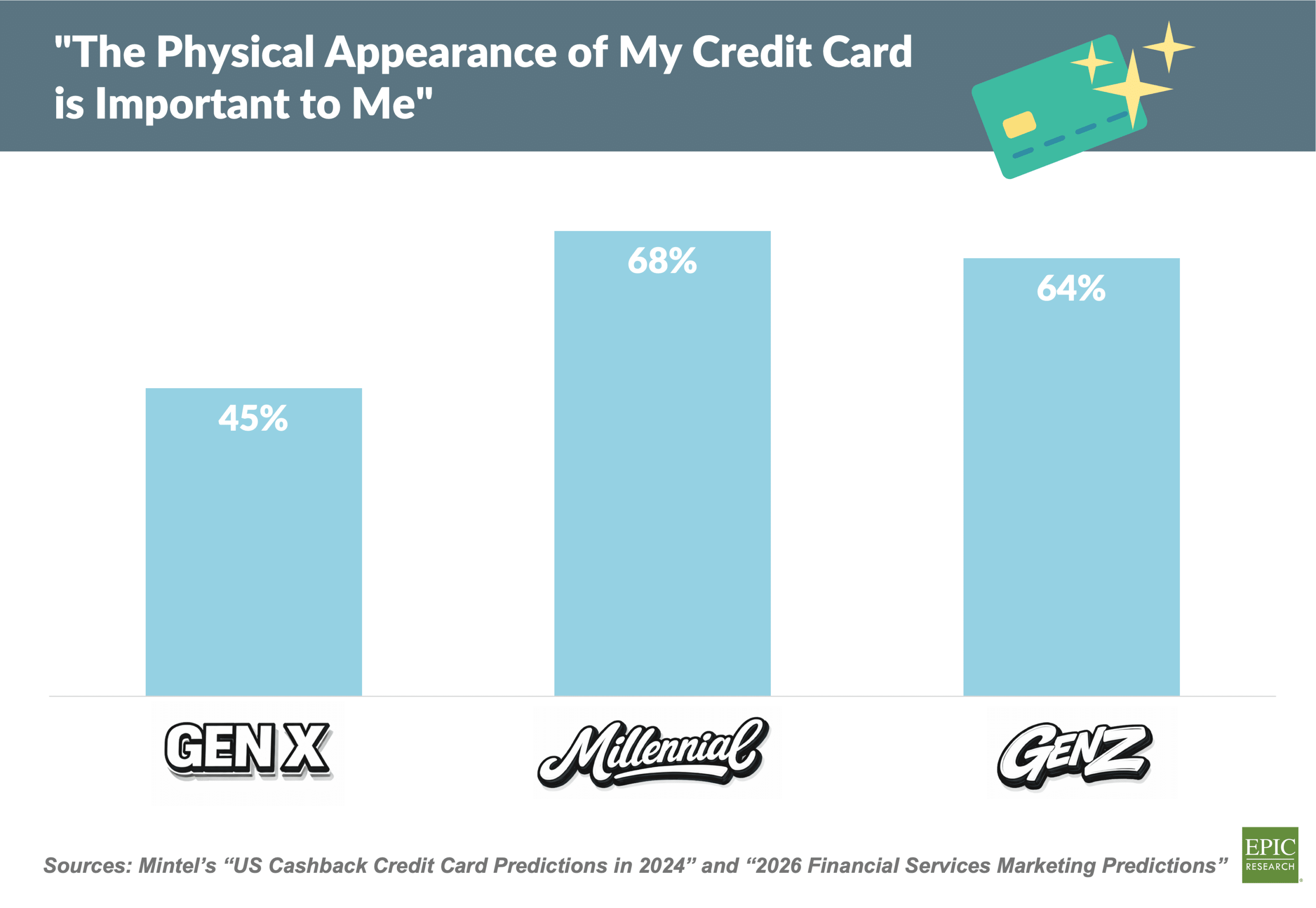
- According to Mintel’s “Future of Flexibility” industry trend report from 2025, the share of consumers who consider the physical appearance of their credit card important has grown to 46% from 29% in 2022
- The preference is strongest among younger demographics: 64% of Gen Z and 68% of Millennials say card appearance matters to them — compared to just 45% of Gen X — according to research Mintel conducted in 2024
PERSONALIZATION AS PERSONAL EXPRESSION
- Several issuers are leaning into customizable card designs — positioning the card as a means of personal expression and identity, not just a financial tool
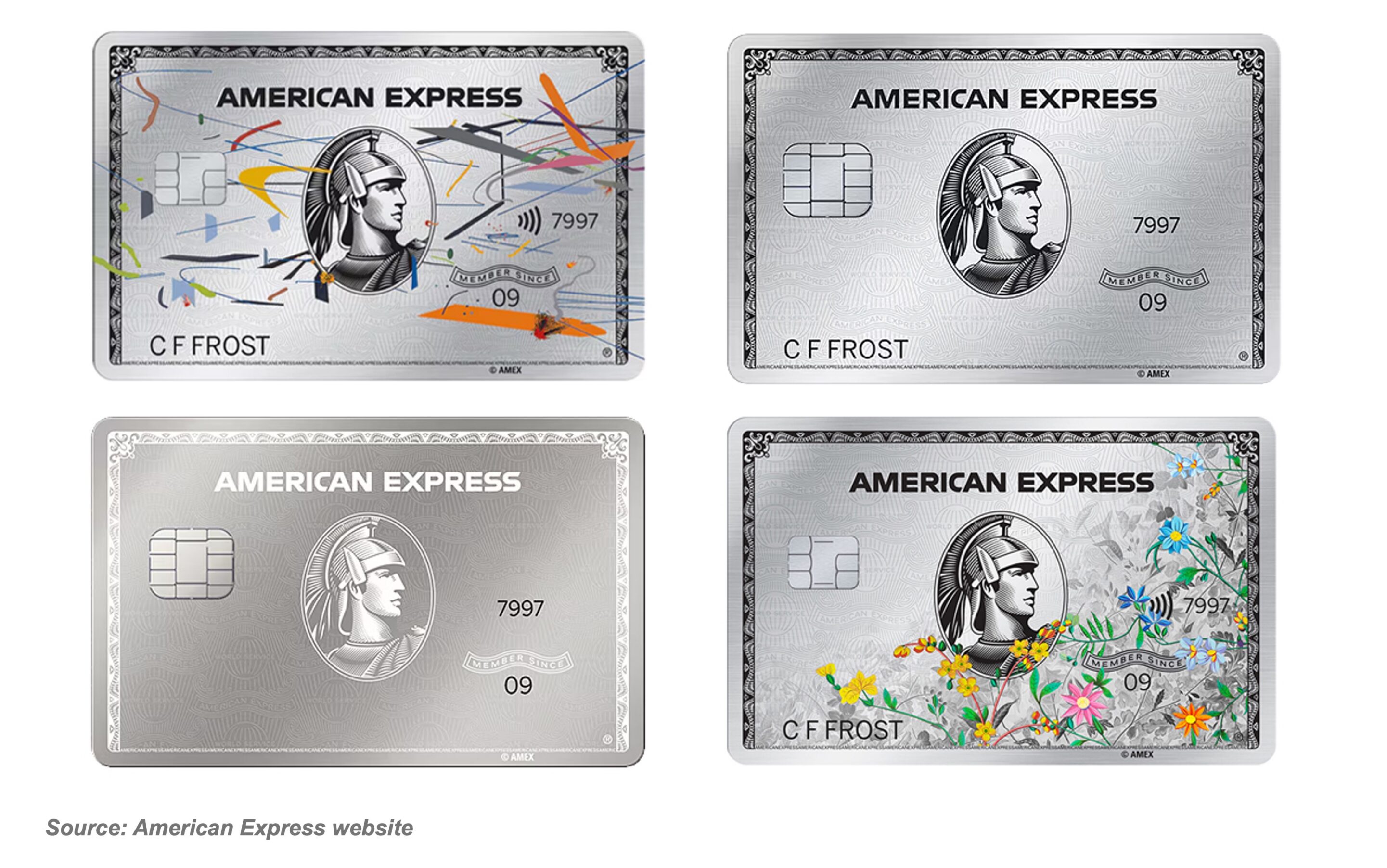
- Amex Platinum gives cardholders a choice between metal and 85% recycled plastic, plus multiple metal designs featuring artwork by world-renowned artists and a limited-edition mirror finish
- Wells Fargo’s Card Design Studio® lets customers upload their own images and logos, turning their eligible card into “a reflection of what matters most to you”

- Discover it® Student Cash Back currently offers 19 design options — from abstract art to playful photography — a useful proof point for an issuer targeting younger audiences

PREMIUM BENEFITS = PREMIUM DESIGNS
- To align with premium preferences and broader cultural trends, issuers are building physical card experiences that communicate status, luxury, and durability
- Most premium cards use metal or metal composites (stainless steel, aluminum, or blended materials), delivering a heavier feel that signals the status and benefits that come with it

- Select ultra-premium cards go further with luxury materials:
- The invite-only Dubai First Royale Mastercard features a 0.235-carat diamond and gold trim

- Luxury Card’s Mastercard Gold Card is plated with 24K gold

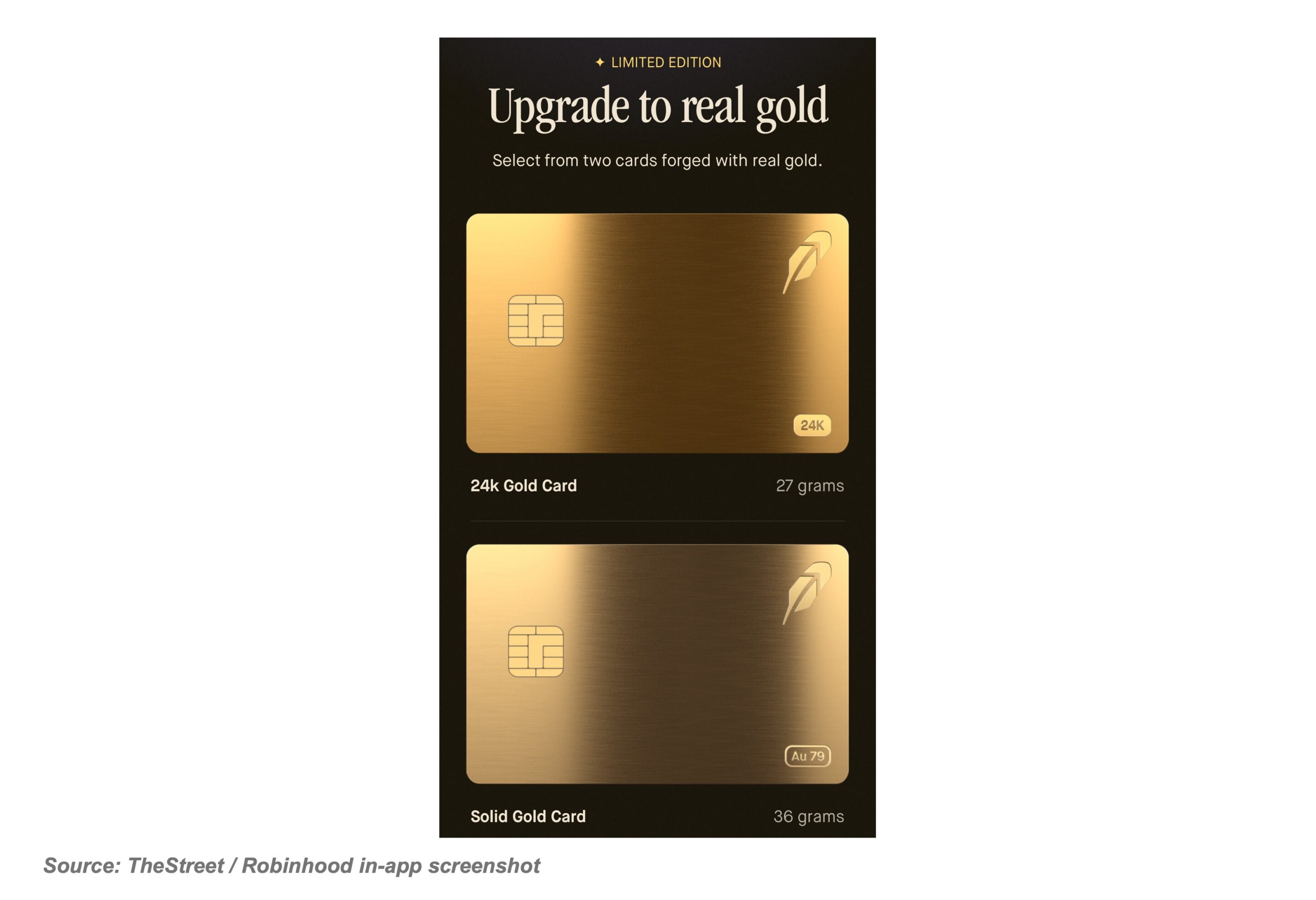
- Robinhood’s Gold Card lets customers upgrade from standard “gold-washed” stainless steel (~17g) to a solid gold card weighing 36 grams — the most newsworthy of the three, given Robinhood’s disruptor positioning
DIGITAL-FIRST PRODUCTS FOLLOW THE SAME PLAYBOOK
- Cash App lets users design their own card within the app, with customizations including glitter, stamps, emojis, and drawings

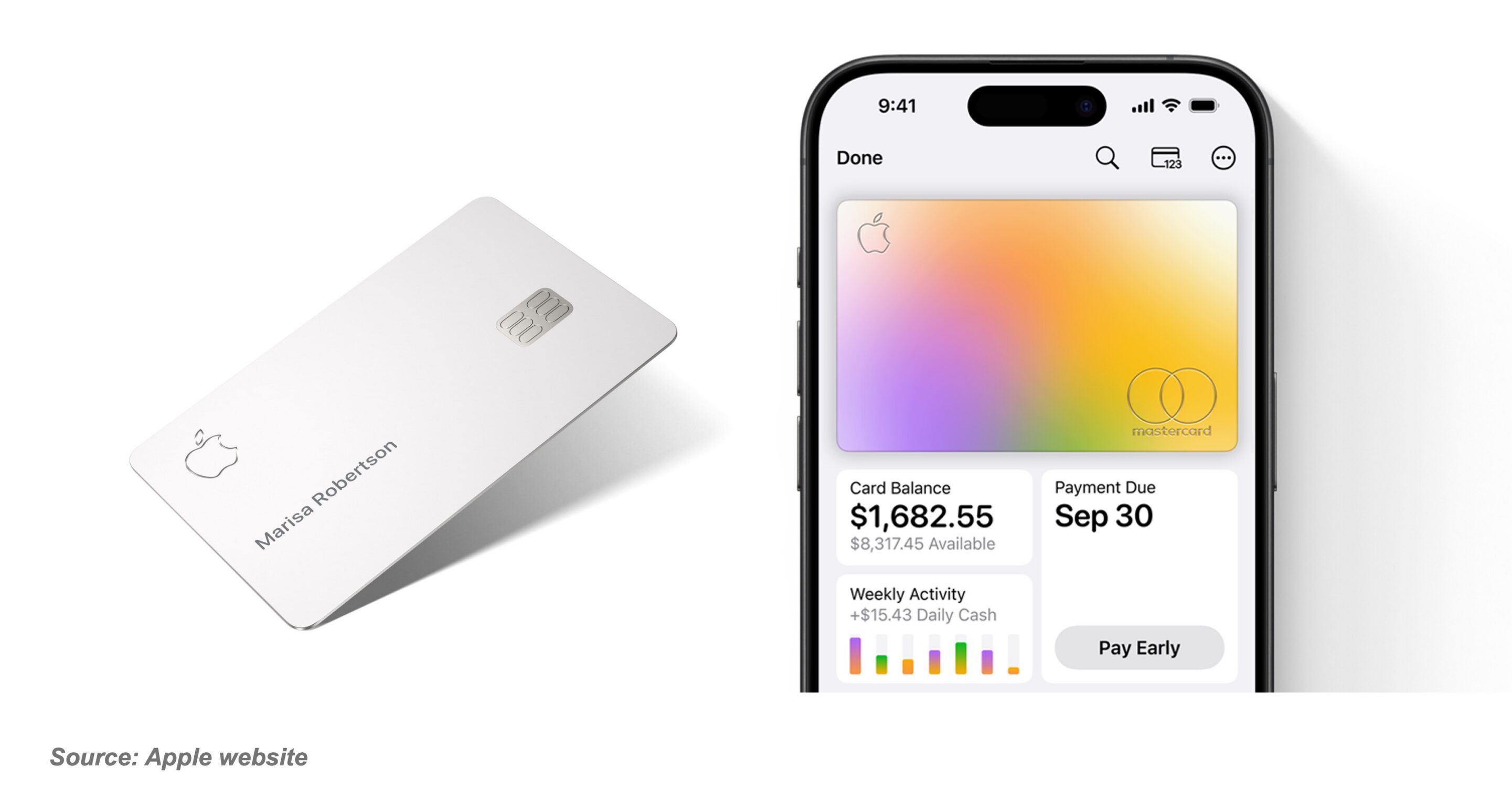
- Apple Card features dynamic digital card art that changes colors based on spending habits — a clever use of design as behavioral reinforcement, making personalization feel earned rather than chosen
THE FLIP SIDE: WHEN DESIGN DOESN’T MATTER
- While physical cards remain valuable, the convenience and security of digital wallets is producing a “wallet thinning” effect — consumers seek to carry fewer physical cards and manage more through digital wallets
- A 2025 PYMNTS Intelligence study of 216,000 global consumers found that 18% use mobile wallets as their default payment mode and an additional 39% use mobile wallets interchangeably, especially for online purchases
- This behavioral shift is driving increased marketing spend on digital adoption, with some brands using incentives to accelerate digital wallet adds:
- U.S. Bank’s Kroger co-brand card offers 5% cash back on mobile wallet purchases vs. 2% in-store and 1% everywhere else
- Verizon offered a $10 Verizon Dollar bonus for adding its card to a mobile wallet

- Many issuers now promote digital adoption at onboarding by offering instant virtual card access upon approval — eliminating the friction of waiting for the physical card and accelerating first spend
AI Is Eating Search — and Your Digital Acquisition Strategy
- Gen AI’s whiplash-inducing growth has forced a rethink on how consumers find financial products

- The old model — search returns links, consumer clicks through, site captures lead — is eroding fast as over 90% of Gen AI queries now end on the bot site itself, never generating a click downstream

- For financial services marketers, consumer engagement as measured by post-search clicks has dropped 10%–50% in the past 18 months

- Not everyone is losing — Chase and Capital One are not only capturing the most Gen AI referrals among banks — their volume is actually growing while peers stay flat

- Among aggregators, NerdWallet leads, with The Points Guy gaining ground; Bankrate and Credit Karma are holding steady
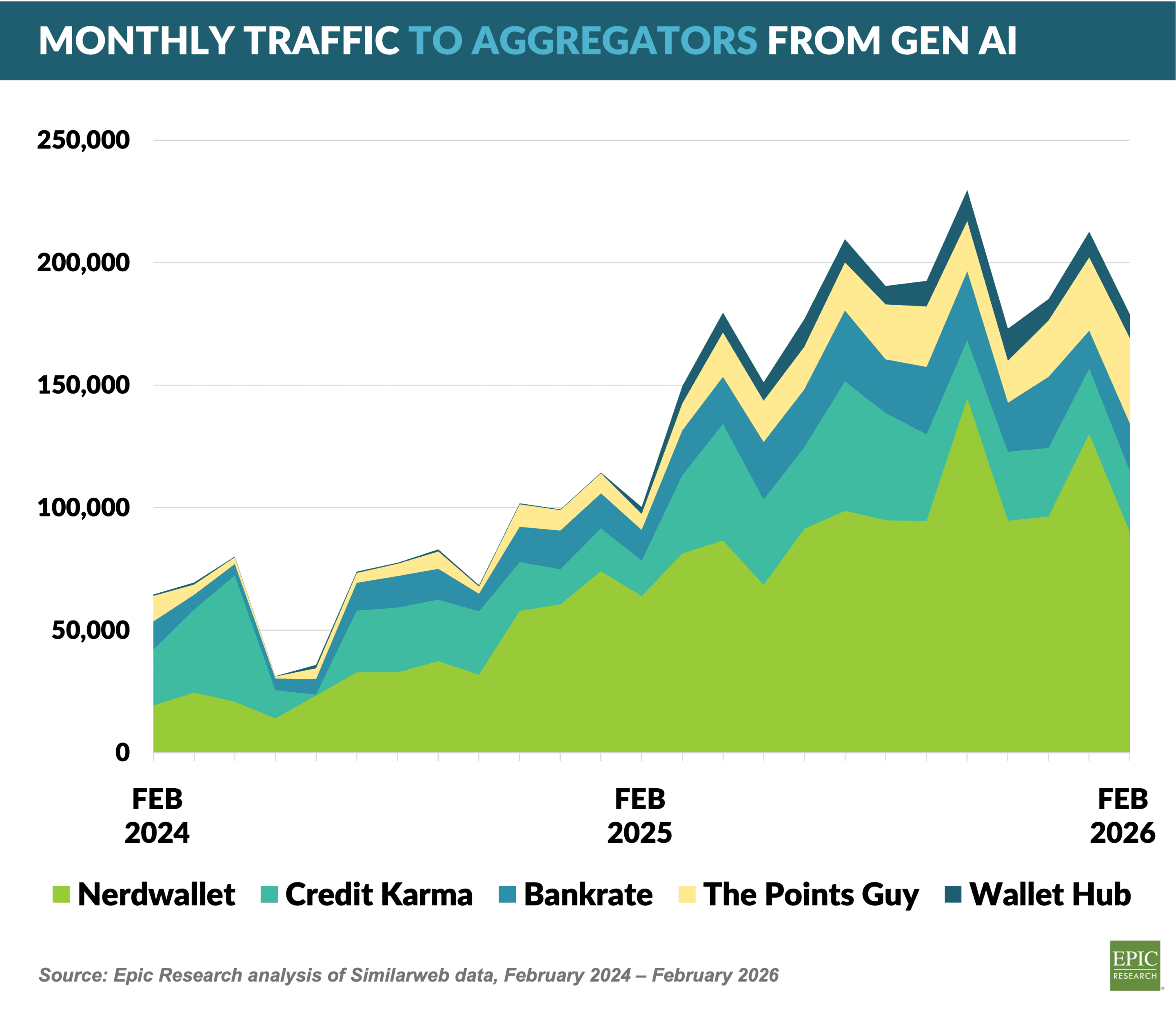
- Fintechs Wise, PayPal, and Credit Karma compete head-to-head for Gen AI-driven traffic with the big banks

- If you haven't audited how your brand performs in AI-generated responses, you're flying blind — the Gen AI referral race is real, it's competitive, and it's only going to intensify as AI platforms figure out monetization
- Digital acquisition strategies built around traditional search are due for a hard look
Your Application Flow Is Leaving Money on the Table
- An Epic review of top bank credit card application flows reveals opportunities to improve booking rates, including:
- Minimizing application fields, especially on existing customer solicitations, to only those that are critical in the underwriting process — reducing application fields has been shown to increase application completion
- Capturing contact information (email, phone) early in the process to allow “chase the app” follow-on marketing for incomplete applications
- Contact Epic for a proprietary review of your process

- It’s early, but YTD advertising volume through February is generally flat to down apart from Education Lending and HELOC non-direct mail channels

- In addition to the volume of education loan offers increasing, “demand” for these loans, as shown by Google search volume, is up 25% from last year — the spike in marketing and consumer interest likely due to the elimination of the Grad PLUS government loan program and other tightened borrowing limits


- Reported application rates for any kind of credit over the past twelve months increased in February to the highest level since October 2022, driven by an increase in credit card applications
- The overall rejection rate for any kind of credit over the past twelve months decreased to 15.9 percent, the lowest level since June 2021 with rejection rates falling across all credit types

- Capital One Goes Native: Capital One has begun originating select branded cards — Venture, Savor, and Quicksilver — on the Discover Network
- This marks the first major step in migrating card volume to Discover
- This is one of the most significant payment network shakeups in decades — with consumer acceptance being the open question
- Our experience would suggest that the Discover brand would have lower response rates than Visa or Mastercard; however, Capital One has been known since its inception for its analytical approach so it is doubtful they would adopt a longer term strategy that doesn’t make sense

- Bilt Makes Rewards Rocket Science — Bilt, that recently moved its rent rewards credit card partnership from Wells Fargo to Cardless, unveiled three new cards with two rewards currencies, each redeemable differently, plus two distinct earning structures to choose from
- With a new Bilt card, you must choose between earning Bilt Cash or using earning tiers based on your monthly spending
- If you choose the earning tiers, you can earn up to 1.25 points per dollar of your housing payment
- Complexity for complexity's sake? Some Bilt cardholders are not so happy

- Financial Media Networks: The Next Card Revenue Stream
- Credit card companies such as Chase, Amex, and Mastercard have launched media networks that offer advertisements targeted using customers’ purchase history and published on their owned channels
- US financial media network ad spending is projected to grow nearly 90% in 2026, reaching $1.22 billion
- Chase Media Solutions, launched in 2024, drove $12 billion in customer spend in its first year — a 31% year-over-year increase
- Card transaction data is becoming a major monetization asset — and a new battleground for marketing budgets
Thank you for reading.
Jim Stewart and Ben Brake
www.epicresearch.net
The Epic Report is published monthly, with the next issue in May
Do you have a question about this issue or a suggestion about a future Epic Report topic? Please email me with your comments and suggestions on future topics or to have someone added to our distribution list.
Epic Research is a marketing company that helps our financial services clients acquire new customers via organic growth. Reach out if we can help you achieve world class results!